
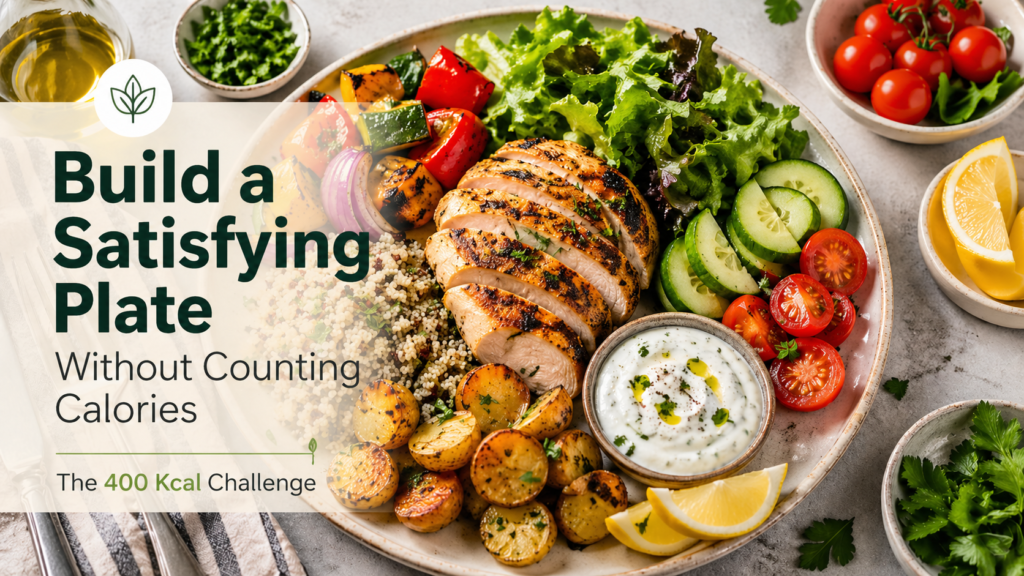
A satisfying plate should feel calm, not complicated.
Eating well can feel harder than it needs to be when every meal starts with mental math. You may want structure, balance, and meals that support your goals, but you may not want to count every calorie, weigh every ingredient, or turn lunch into a spreadsheet.
That is where learning how to build a satisfying plate without counting calories can help. Instead of tracking every bite, you use a simple visual structure: protein, fiber-rich foods, enough volume, smart carbs, and flavor that makes the meal enjoyable.
Quick answer: how do you build a satisfying plate without counting calories?
To build a satisfying plate without counting calories, start with a clear source of protein, add plenty of vegetables or fruit for volume and fiber, include a moderate portion of carbs if they fit the meal, and finish with a small amount of fat or sauce for flavor. The goal is not restriction. It is balance, fullness, and a plate that feels complete.
Why this matters
- It gives you structure without needing to track every number.
- It helps meals feel more filling and less random.
- It makes balanced eating easier to repeat on busy days.
What makes a plate satisfying?
A satisfying plate is not just a plate with fewer calories. It is a plate that gives your body enough texture, volume, protein, fiber, and pleasure to feel like a real meal.
Many people try to make meals “lighter” by simply making them smaller. That can work for one meal, but it often backfires later if the plate is missing the elements that help you feel full.
A more satisfying plate usually includes:
- Protein to make the meal feel more substantial
- Fiber-rich foods like vegetables, fruit, beans, or whole grains
- Enough food volume so the plate does not feel tiny
- Some carbs for energy and comfort
- Flavor from herbs, spices, sauces, citrus, pickles, or a small amount of fat
The point is not to create a perfect meal every time. The point is to create a plate that does not leave you thinking about snacks 30 minutes later.
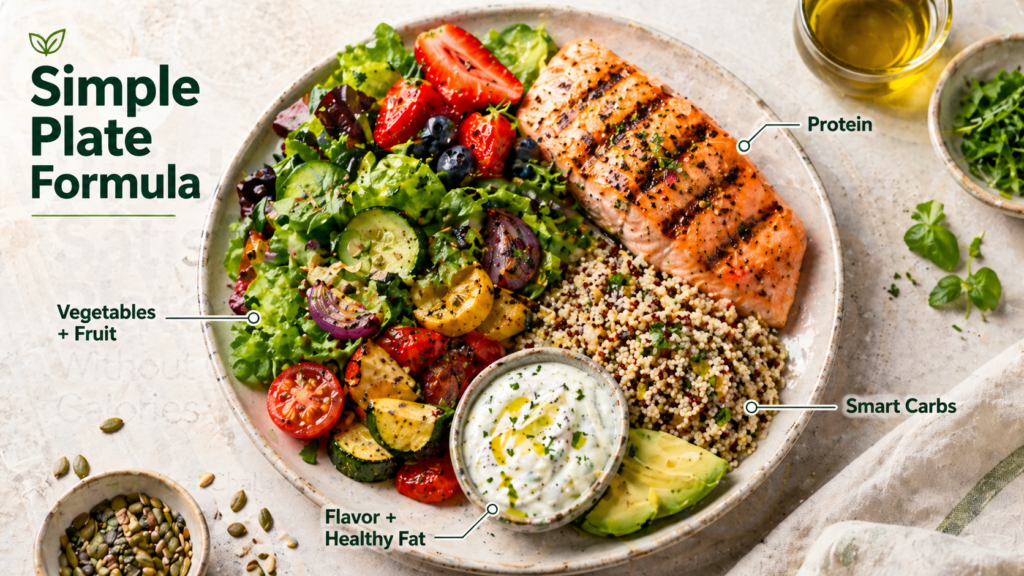
The simple plate formula
A practical plate formula can help you make better choices without overthinking.
Use this structure most of the time:
- Start with protein.
- Add volume with vegetables or fruit.
- Choose a smart carb.
- Add flavor and a little fat.
- Adjust based on hunger, schedule, and the rest of your day.
This formula works for breakfast, lunch, dinner, and lunchbox meals. It also works whether you cook from scratch, use leftovers, or assemble something quickly from the fridge.
1. Start with protein
Protein is one of the easiest ways to make a meal feel more complete. You do not need to make every meal extremely high protein, but having a clear protein source can make a big difference.
Simple protein options include:
- Eggs
- Greek yogurt
- Cottage cheese
- Chicken breast or turkey
- Tuna or salmon
- Tofu or tempeh
- Lean beef
- Lentils or beans
- Edamame
- Protein-rich cheese in moderate portions
For a 400 kcal-style meal, protein helps the plate feel more generous without needing to rely only on large portions of pasta, bread, rice, or snacks.
Example:
Instead of toast with jam only, try toast with cottage cheese and berries. It is still simple, but it has more structure and staying power.
2. Add volume with vegetables or fruit
Volume matters because a visually small meal can feel disappointing, even if the calories are technically enough. Vegetables and fruit can help create a plate that looks and feels more abundant.
Easy volume boosters include:
- Lettuce, spinach, arugula, or mixed greens
- Cucumber, tomatoes, peppers, carrots, or zucchini
- Green beans or asparagus
- Berries, apple slices, orange, or melon
- Roasted vegetables
- Frozen vegetables added to quick meals
This does not mean every meal needs a huge salad. It simply means adding something fresh, colorful, or high-volume when you can.
Example:
A small portion of pasta may feel underwhelming on its own. Add chicken, roasted vegetables, and a light sauce, and it becomes a more satisfying plate.
3. Choose carbs that fit the meal
Carbs are not the problem. The issue is usually when a plate is mostly carbs and very low in protein, fiber, or volume.
A balanced plate can include carbs such as:
- Potatoes
- Rice
- Pasta
- Whole grain bread
- Wraps
- Oats
- Couscous
- Quinoa
- Fruit
- Beans or lentils
The practical question is not “Can I eat carbs?” It is “How can I include carbs in a way that still leaves room for protein, vegetables, and flavor?”
Example:
A wrap with chicken, crunchy vegetables, and yogurt sauce will usually feel more balanced than a wrap filled mostly with cheese and dressing.
4. Add flavor so the meal feels worth eating
A meal can be technically balanced and still feel boring. If your meals are bland, you may keep searching for something else after eating.
Flavor helps a plate feel finished.
Try adding:
- Lemon juice or vinegar
- Fresh herbs
- Garlic, onion, paprika, chili flakes, or curry powder
- Pickles, capers, or olives
- Salsa or hot sauce
- A spoonful of yogurt sauce
- A small amount of pesto, tahini, avocado, or olive oil
Flavor does not have to mean a heavy sauce. It can be acidity, crunch, heat, freshness, or creaminess.
This is especially useful for lower-calorie meals. When the portion is moderate, flavor becomes even more important.
How to make a 400 kcal meal feel more filling
A 400 kcal meal can feel satisfying or disappointing depending on how it is built.
A less filling version might be:
- A small pastry and coffee
- A tiny bowl of plain cereal
- A few crackers with cheese
- A small portion of pasta with little protein
A more filling version might be:
- Greek yogurt with berries, oats, and a few nuts
- Eggs with toast and tomatoes
- Chicken lunchbox with potatoes and salad
- Tofu rice bowl with vegetables and a flavorful sauce
- Cottage cheese bowl with fruit and crunchy toppings
The difference is not just calories. It is structure.
A more satisfying 400 kcal-style plate usually has a better balance of protein, fiber, water-rich foods, and flavor. That combination can help the meal feel more complete.
For more ideas, you can link naturally to easy 400 kcal lunchbox ideas here, especially if the reader wants portable meals for work, errands, or busy days.
A simple visual method for portion balance
You do not need to measure everything to create a better plate. A visual method can be enough for many everyday meals.
Try this:
- Half the plate: vegetables, salad, or fruit
- One quarter of the plate: protein
- One quarter of the plate: carbs
- Small extra: sauce, fat, cheese, nuts, seeds, or dressing
This is not a strict rule. It is a starting point.
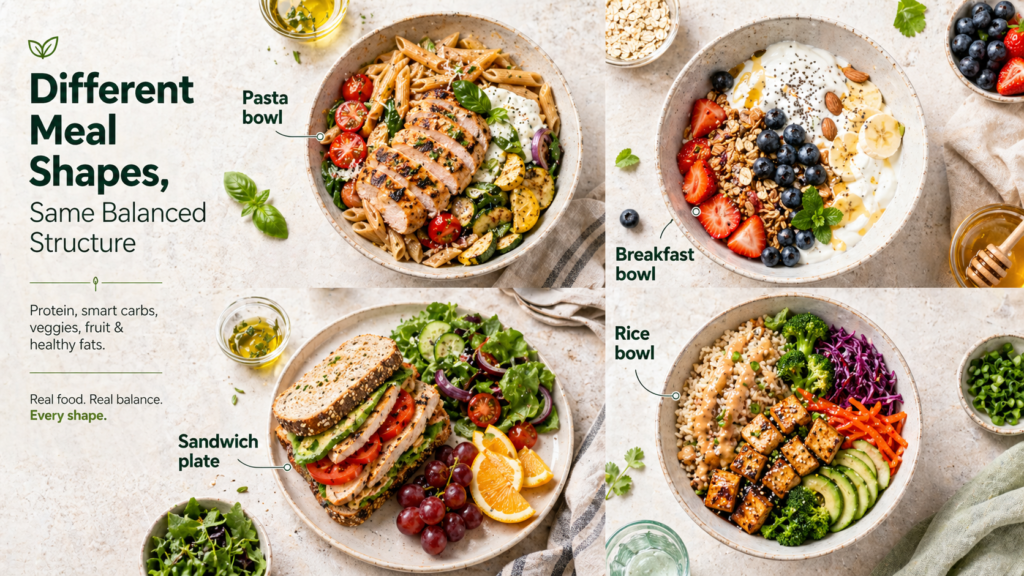
Some meals will look different. Soup, pasta, bowls, sandwiches, and breakfast plates do not always fit neatly into sections. In those cases, use the same idea inside the meal.
For example:
- Pasta bowl: pasta + chicken + vegetables + sauce
- Breakfast bowl: yogurt + fruit + oats + nuts
- Sandwich plate: sandwich with protein + side salad + fruit
- Rice bowl: rice + tofu + vegetables + sauce
The shape changes, but the structure stays the same.
Real-life plate examples
Here are simple examples of satisfying plates that do not require calorie counting.
Breakfast plate
Greek yogurt bowl with berries, oats, cinnamon, and a few chopped nuts.
Why it works:
It has protein from yogurt, fiber and volume from berries, carbs from oats, and flavor from cinnamon and nuts.
Lunchbox plate
Chicken, roasted potatoes, cucumber-tomato salad, and a yogurt herb sauce.
Why it works:
It feels like a complete meal, travels well, and includes protein, carbs, crunch, freshness, and flavor.
Quick dinner plate
Egg omelet with spinach and tomatoes, one slice of toast, and a side of fruit.
Why it works:
It is simple, fast, and balanced without feeling like a “diet” dinner.
No-cook plate
Cottage cheese, whole grain crackers, sliced vegetables, fruit, and a few olives.
Why it works:
It is easy to assemble, has different textures, and feels more complete than random snacking.
Leftovers plate
Leftover rice, tuna or chicken, mixed vegetables, and a spicy yogurt sauce.
Why it works:
It turns basic leftovers into a structured meal with very little effort.
For readers who want dinner inspiration, this is a natural place to link to high-protein dinners around 400 kcal.
Common mistakes that make a plate less satisfying
A meal does not need to be perfect, but a few common patterns can make it harder to feel full.
Mistake 1: Making the meal too small
A tiny plate may look “good” from a calorie perspective, but it may not support your afternoon, your mood, or your next food decision.
Try this instead:
Keep the portion moderate, but add more low-calorie volume from vegetables, salad, fruit, or broth-based soups.
Mistake 2: Skipping protein
A plate with mostly crackers, toast, fruit, or pasta may taste good, but it can leave you hungry sooner.
Try this instead:
Add eggs, yogurt, cottage cheese, chicken, tuna, tofu, beans, or another protein source.
Mistake 3: Avoiding carbs completely
Some people remove carbs to make meals lighter, then feel unsatisfied and snack more later.
Try this instead:
Choose a moderate carb portion and build the rest of the plate around protein and fiber.
Mistake 4: Forgetting flavor
If a meal feels like punishment, it is less likely to become a routine.
Try this instead:
Use spices, herbs, lemon, vinegar, pickles, salsa, yogurt sauces, or a small amount of a flavorful fat.
Mistake 5: Copying meals that do not fit your life
A beautiful meal plan is not useful if it requires too much cooking, too many ingredients, or too much time.
Try this instead:
Build a short list of repeatable meals you can make on real weekdays.
The “good enough” plate rule
Balanced eating becomes easier when you stop aiming for perfect meals and start aiming for repeatable meals.
A good enough plate might be:
- A protein
- Something colorful
- Something filling
- Something enjoyable
That is enough to start.
You can always improve the details later. Maybe you add more vegetables next time. Maybe you choose a higher-protein breakfast tomorrow. Maybe you prepare a sauce that makes lunch more exciting.
Progress often comes from small upgrades, not dramatic changes.
How to use this method when eating out
You can still use the satisfying plate method when you are not eating at home.
Look at the meal and ask:
- Where is the protein?
- Is there any vegetable, salad, or fruit?
- Is the carb portion moderate or oversized for my hunger?
- Does the meal have enough flavor to feel enjoyable?
- Would adding a side salad, soup, or extra protein make it more satisfying?
For example, if you order a sandwich, you might add a side salad or choose a sandwich with chicken, turkey, eggs, tuna, or cheese rather than one that is mostly bread and sauce.
If you order pasta, you might choose one with seafood, chicken, vegetables, or tomato-based sauce instead of a very heavy cream-based option every time.
This is not about strict rules. It is about staying aware without turning the meal into a project.
How to use this method for meal prep
Meal prep becomes easier when you prep building blocks instead of full complicated recipes.
Try preparing:
- One or two proteins
- One cooked carb
- Two vegetables
- One sauce or dressing
- One easy snack or breakfast base
Then mix and match during the week.
Example meal prep combination:
- Protein: grilled chicken or tofu
- Carb: roasted potatoes or rice
- Vegetables: cucumber salad and roasted peppers
- Sauce: yogurt garlic sauce
- Extra: fruit or Greek yogurt
From this, you can build lunchboxes, bowls, wraps, or quick dinners without starting from zero every day.
Practical takeaway
The easiest way to build a satisfying plate without counting calories is to stop thinking only about “less” and start thinking about structure. Add protein, add volume, include carbs with intention, and make the meal taste good enough that you actually enjoy eating it.
FAQ
Can I build a satisfying plate without counting calories?
Yes. You can build a satisfying plate without counting calories by using a simple structure: protein, fiber-rich foods, volume from vegetables or fruit, a moderate carb portion, and enough flavor to make the meal enjoyable.
What should I put on my plate to feel fuller?
Start with protein, then add vegetables or fruit for volume and fiber. Include a carb source if it fits the meal, and finish with a small amount of fat, sauce, herbs, or spices for flavor.
Are 400 kcal meals enough to feel full?
A 400 kcal meal can feel filling if it is built well. Meals with protein, fiber, high-volume foods, and satisfying flavor usually feel more complete than small portions of low-protein foods.
Do I need to avoid carbs to make a balanced plate?
No. Carbs can be part of a balanced plate. The key is to include them in a moderate portion and pair them with protein, vegetables, and flavor so the meal feels satisfying.
What is the easiest plate method for busy days?
Use a simple formula: protein first, then vegetables or fruit, then a smart carb, then flavor. This works for bowls, lunchboxes, sandwiches, breakfast plates, and quick dinners.
What if I still feel hungry after a balanced meal?
Check whether the meal had enough protein, fiber, and volume. You may also need a larger portion, more vegetables or fruit, or a more satisfying flavor element. Hunger can vary depending on your day, activity, and previous meals.